A Complete Guide to Inclusive Taglines That Inspire
Words have a unique ability to shape culture, and few areas prove this more clearly than workplace and community messaging.
Diversity slogans have become a powerful tool for organizations, schools, and movements looking to communicate values of inclusion, respect, and belonging in just a few memorable words.
From corporate campaigns to grassroots movements, these short phrases carry big ideas about acceptance and unity.
In this guide, we’ll explore what makes diversity slogans effective, look at some of the most memorable examples used across industries, break down the thinking behind strong inclusive messaging, and share practical tips for crafting your own.
Whether you’re building a workplace campaign, writing for a school project, or simply curious about the language of inclusion, this article covers everything you need to know.
What Makes Diversity Slogans So Effective?
Effective taglines share a few common traits: brevity, emotional resonance, and clarity of purpose. Diversity slogans succeed when they distill a complex value like inclusion into a phrase that is instantly understandable and easy to remember.
They are short enough to fit on a poster or social media post, yet meaningful enough to spark reflection.
Unlike generic corporate messaging, the best diversity slogans avoid vague language and instead focus on specific, relatable ideas belonging, respect, representation, and shared humanity.
This clarity is a major reason certain phrases have been adopted repeatedly across different organizations and campaigns over the years.
“Different voices, one team” captures in just four words what many organizations spend pages trying to explain in a mission statement.
A Brief Overview of How Diversity Slogans Have Evolved
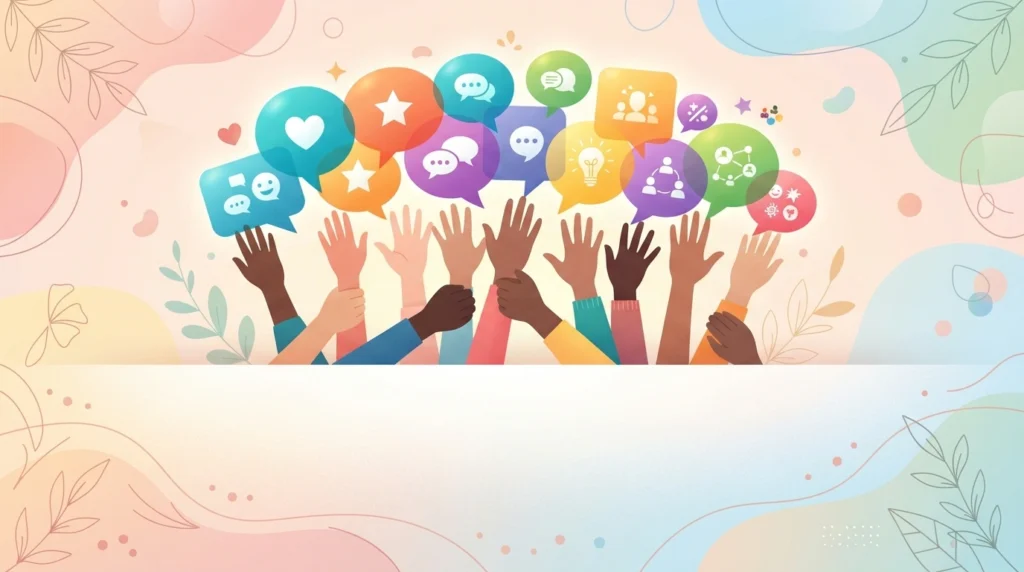
Diversity slogans have changed alongside broader shifts in how society talks about inclusion, moving from broad statements of tolerance to more specific and actionable language.
Early Messaging Around Equality (Mid-20th Century)
Some of the earliest examples of inclusive public messaging emerged during the civil rights movement, when phrases emphasizing equality and unity were used in marches, publications, and public campaigns.
While not “diversity slogans” in the modern corporate sense, this era laid important groundwork for the language of inclusion that followed, emphasizing shared humanity and equal treatment.
The Rise of Workplace Diversity Campaigns (1980s–2000s)
As organizations began formalizing diversity and inclusion programs, workplace-specific slogans started appearing in employee handbooks, training materials, and internal campaigns.
This period introduced phrases focused on teamwork and collaboration across differences, reflecting a growing understanding that diverse teams could drive better business outcomes.
Modern Diversity Slogans (2010s Present)
Modern diversity slogans are often shaped by social media, where short, shareable phrases spread quickly across platforms.
Many contemporary organizations now pair their slogans with specific action-oriented commitments, moving beyond simple statements toward measurable inclusion goals.
This era has also seen diversity slogans become more specific, addressing areas like gender equity, disability inclusion, and cultural representation individually rather than using one broad phrase for everything.
The Most Popular Diversity Slogans Used Today
Here are some of the most recognized and widely used diversity slogans found across workplaces, campaigns, and public messaging:
- “Unity in Diversity” One of the most widely used phrases globally, emphasizing strength found in differences.
- “Different Voices, One Team” Commonly used in workplace settings to highlight collaboration across backgrounds.
- “Inclusion Is Not a Checkbox” A phrase used to push organizations toward genuine, ongoing inclusion efforts.
- “Everyone Belongs Here” A simple, welcoming statement often used in schools and community spaces.
- “Strength Through Difference” A phrase highlighting the practical benefits of diverse perspectives.
- “See the Person, Not the Label” Used to encourage individual recognition beyond group identity.
- “Diversity Is Our Strength” A widely adopted corporate phrase found in many company mission statements.
Each of these diversity slogans was designed to communicate a specific value, whether it’s teamwork, respect, or genuine belonging, in language that’s easy to remember and repeat.
Why Diversity Slogans Work: The Psychology Behind Them
There’s real psychology behind why certain diversity slogans resonate more than others. Communication experts often point to three key principles at play:
- Emotional connection Effective slogans tap into universal feelings like belonging and respect rather than abstract policy language.
- Memorability through simplicity Short, clear phrases are far easier for people to recall and repeat in conversation.
- Actionable framing The strongest diversity slogans suggest a value in action, not just an idea, encouraging real behavior rather than passive agreement.
This combination explains why some phrases spread widely across organizations and social platforms, while others are quickly forgotten.
How Organizations Use Diversity Slogans in Practice
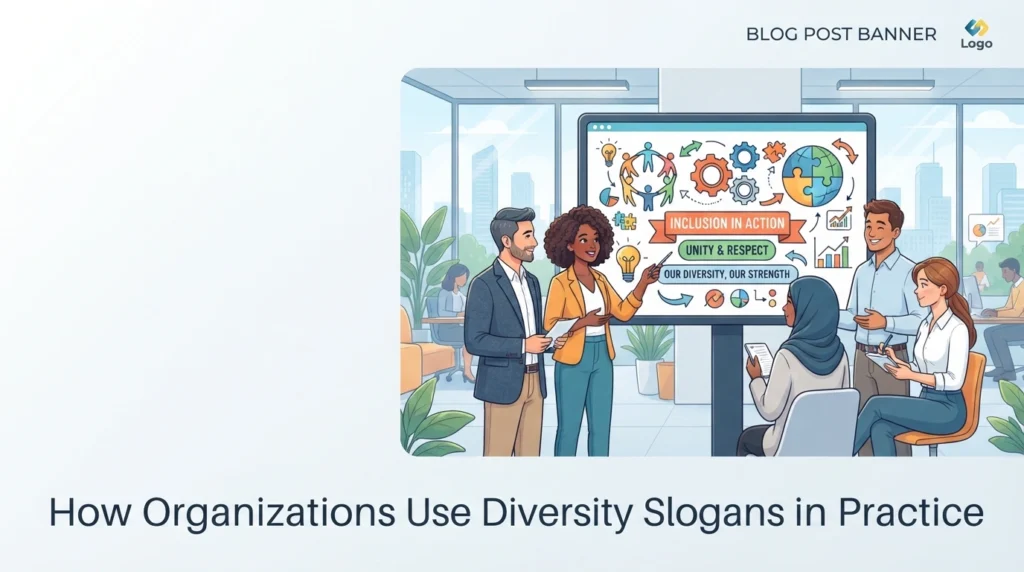
Diversity slogans appear across many different contexts, each with a slightly different purpose. In workplaces, they often appear in onboarding materials, internal communications, and company values statements to reinforce a culture of respect.
In educational settings, they’re used on posters and in curricula to promote acceptance among students. In public campaigns, diversity slogans are used to rally support for broader social causes and community initiatives.
Communication researchers frequently note that a slogan alone doesn’t create meaningful change it works best when paired with concrete action, such as inclusive hiring practices, accessible facilities, or ongoing training.
A well-crafted phrase can open the door to a conversation, but the follow-through is what builds lasting trust.
Lesser-Known but Impactful Diversity Slogans
Beyond the most common phrases, there are several lesser-known diversity slogans that have made a meaningful impact in specific communities and campaigns:
- “Bring Your Whole Self to Work” A phrase encouraging authenticity in professional settings.
- “Different Paths, Shared Purpose” Used to highlight common goals despite different backgrounds.
- “Ability, Not Disability” A phrase used in disability inclusion campaigns to shift focus toward capability.
- “Many Cultures, One Community” Often used in multicultural neighborhood and city initiatives.
- “Respect Has No Language Barrier” Used in campaigns promoting cross-cultural understanding.
These lesser-known diversity slogans demonstrate how inclusive messaging can be tailored to address specific aspects of representation and belonging.
Tips for Writing an Effective Diversity Slogan
If you’re working on a diversity campaign for your organization, school, or community group, here are a few practical tips for crafting a slogan that resonates:
- Keep it short Aim for five to eight words at most for maximum memorability.
- Be specific, not vague Avoid generic phrases that could apply to any cause; focus on a clear value or action.
- Use inclusive, respectful language Choose words that reflect genuine respect rather than performative statements.
- Pair it with action A strong slogan should connect to real initiatives, not stand alone as decoration.
- Test it with diverse audiences Get feedback from people of different backgrounds before finalizing your message.
Studying how the most effective diversity slogans were crafted offers a useful lesson in creating messaging that feels genuine rather than performative.
Frequently Asked Questions
What is a good diversity slogan for a workplace?
Phrases like “Different Voices, One Team” or “Everyone Belongs Here” work well in workplace settings because they’re simple, inclusive, and easy to apply across departments.
Why are diversity slogans important?
Diversity slogans help organizations communicate their values clearly and consistently, making abstract commitments to inclusion easier for employees, students, or community members to understand and remember.
Do diversity slogans actually create change?
On their own, slogans raise awareness, but lasting change requires them to be backed by concrete actions such as inclusive policies, training programs, and accountability measures.
How do I create a diversity slogan for my organization?
Start by identifying the specific value you want to communicate, keep the phrase short and clear, and test it with people from different backgrounds before adopting it officially.
Are diversity slogans the same as company mission statements?
No. A mission statement is typically longer and more detailed, while a diversity slogan is a short, memorable phrase meant to summarize a core value in just a few words.
Conclusion
Diversity slogans are far more than catchy phrases they are concise expressions of values that organizations and communities hope to embody.
From workplace campaigns to public initiatives, these taglines reflect an ongoing effort to communicate respect, belonging, and shared humanity in language that’s easy to remember and repeat.
Whether you’re crafting a slogan for your own organization or simply exploring the language of inclusion, understanding what makes these phrases effective adds valuable insight into how words can shape culture.
References
- Society for Human Resource Management (SHRM), Diversity and Inclusion Resources shrm.org
- United Nations, “Diversity and Inclusion” Initiatives un.org
- Harvard Business Review, Research on Workplace Diversity and Inclusion hbr.org
- McKinsey & Company, “Diversity Wins” Report Series mckinsey.com
- Catalyst.org, Research on Inclusive Workplace Practices catalyst.org
- Forbes, “The Business Case for Diversity in the Workplace” forbes.com