The Story Behind the World’s Favourite Chocolate Tagline
Few candy bars have a marketing history as rich as Kit Kat. For decades, Kit Kat slogans have shaped how people around the world think about taking a break, sharing a snack, or simply enjoying a moment of chocolate happiness.
Whether you grew up hearing the jingle on television or you discovered the brand through modern social media campaigns, these catchy lines have quietly become part of everyday pop culture, appearing in conversations, packaging, and countless nostalgic memories shared across generations of chocolate lovers.
In this post, we will explore the history of Kit Kat slogans, break down what makes them so effective, and look at how the brand has adapted its messaging over time.
We will also answer some of the most common questions people ask about this topic, walk through real examples used across different decades, and explain why marketing teams still reference this campaign.
When teaching brand consistency, so by the end you will have a complete picture of why this simple chocolate bar has such a powerful voice in advertising.
Why Kit Kat Slogans Matter in Branding
Kit Kat slogans are not just catchy lines slapped onto a wrapper. They are carefully crafted phrases designed to create an emotional connection between the product and everyday life.
A good tagline in this category does three things at once: it describes the product, it creates a feeling, and it sticks in memory long after the advertisement ends. This combination is rare, and it is exactly why these particular lines have survived so many decades of changing consumer tastes.
Think about how many products you can name just from a tagline. That is the power of well-written Kit Kat slogans. They turn a simple wafer-and-chocolate snack into a cultural symbol tied to rest, relaxation, and small everyday pleasures.
This is why marketing students and copywriters often study this particular campaign as a case study in effective branding, analyzing word choice, tone, and timing to understand why the message resonates across such a wide audience.
The History of Kit Kat Slogans
Kit Kat has been around since the 1930s, and its slogans have evolved alongside changing consumer habits. Understanding this history helps explain why certain lines have lasted for generations while others were quickly replaced, and it also shows how packaging, television, and later the internet each shaped the tone of the brand’s messaging.
The Birth of “Have a Break, Have a Kit Kat”
The most famous of all Kit Kat slogans is undoubtedly “Have a Break, Have a Kit Kat.” Introduced in the 1950s, this line became the backbone of the brand’s identity. It captured a simple truth: everyone needs a short pause during a busy day, and a chocolate bar can be part of that ritual.
“Have a Break, Have a Kit Kat” remains one of the most recognized snippet quotes in advertising history.
This particular phrase succeeded because it was flexible. It worked in television commercials, print ads, and later in digital marketing, proving that a great tagline can transcend the medium it was originally created for and remain effective decades after its debut.
How Kit Kat Slogans Changed With the Decades
As decades passed, Kit Kat slogans began reflecting shifts in culture. In the 1980s and 1990s, campaigns leaned into humor and lighthearted storytelling. By the 2000s, digital media allowed the brand to experiment with shorter, punchier lines suited for online audiences with shrinking attention spans, including social media captions, hashtag campaigns, and short-form video content that reintroduced the classic message to younger consumers.
This evolution shows that successful Kit Kat slogans are never static. They adapt to new platforms while keeping the core message of relaxation and enjoyment intact.
What Makes Great Kit Kat Slogans Work

Not every tagline becomes iconic. So what separates memorable Kit Kat slogans from forgettable ones? Below are the key ingredients marketers point to when analyzing this brand’s messaging.
- Simplicity The best taglines use short, everyday language that anyone can understand instantly.
- Rhythm Many of these lines use repetition or rhyme, making them easy to remember and repeat.
- Emotional relevance Effective messaging taps into a universal feeling, like the need for a short break.
- Consistency The strongest campaigns are reused across years, building familiarity instead of confusing customers with constant change.
- Adaptability Great advertising lines work across TV, print, social media, and packaging without losing their meaning.
These five principles explain why certain lines from this brand have outlived multiple advertising trends and still feel relevant today.
Popular Kit Kat Slogans Over the Years
Here is a list of some of the most recognized slogans and taglines associated with the brand across different markets and eras:
- “Have a Break, Have a Kit Kat”
- “Give Me a Break”
- “No Wrapper Required” (used in regional campaigns)
- “Break Off. Zone Out.”
- “Simply Chocolate, Simply Kit Kat” (regional variant)
- “Unofficial Break Time Snack”
Each entry on this list reflects a different marketing strategy, yet all of them share the same underlying spirit: chocolate as a reward for pausing during a hectic day.
Fans often debate which of these lines deserves the title of best, but the original 1950s line still tends to win in most surveys and nostalgia polls, largely because of how naturally it fits into ordinary daily conversation.
How Kit Kat Slogans Reflect Global Marketing Strategy
Interestingly, not all markets use identical taglines. Regional teams often localize messaging to fit cultural context, which means the wording used in the UK may differ slightly from campaigns run in the US, Japan, or India.
In Japan, for example, the brand leaned into a phonetic connection between “Kit Kat” and a local phrase meaning “surely win,” which made the product hugely popular among students during exam season, especially as a good-luck gift ahead of important tests.
This localization strategy shows that a single winning phrase does not have to be one-size-fits-all. Instead, it becomes a flexible framework built around a consistent brand promise, adjusted to resonate with local audiences while still keeping the core identity of the brand intact.
Lessons Marketers Can Learn From Kit Kat Slogans
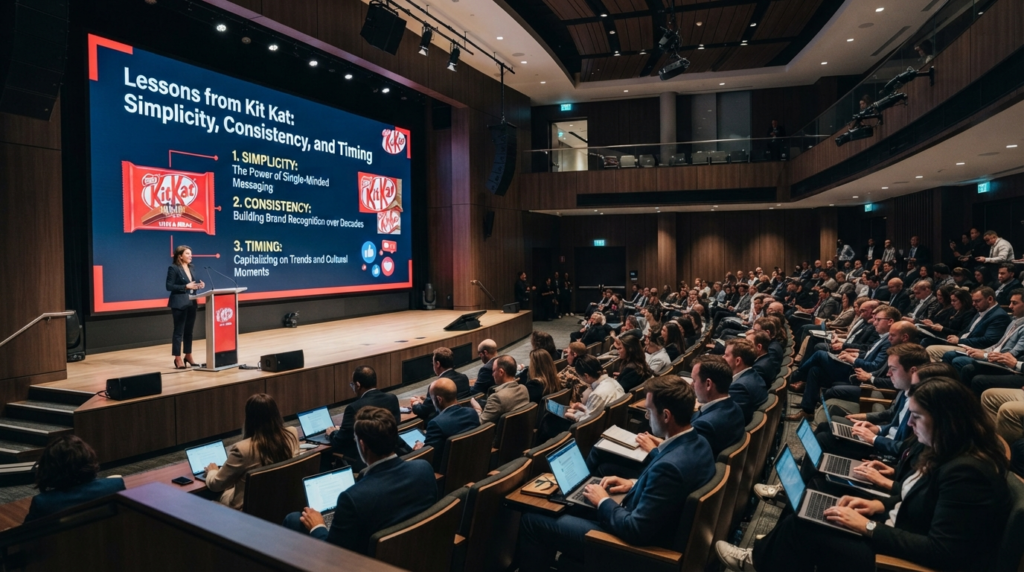
Businesses of all sizes can learn from how this brand has handled its slogan strategy over time. Below are a few practical takeaways.
- Keep messaging short. Long, complicated lines rarely become part of everyday language the way concise Kit Kat slogans have.
- Anchor the message to a feeling. People remember how a slogan makes them feel, not just the words themselves.
- Reuse what works. Instead of reinventing messaging every year, build on a proven foundation, as many successful Kit Kat slogans have done for decades.
- Allow room for local adaptation. A rigid, one-size-fits-all approach can limit relevance in different regions.
These lessons apply well beyond confectionery brands and are useful for anyone working in advertising, product marketing, or content strategy.
Small businesses in particular can benefit from this approach, since limited advertising budgets make it especially important to choose one clear, memorable message and stick with it rather than constantly testing new ideas that never have time to build recognition.
A single strong line, repeated consistently across packaging, social posts, and customer interactions, often outperforms a dozen scattered campaigns that never settle into a recognizable identity.
The Cultural Impact of Kit Kat Slogans
Beyond advertising, Kit Kat slogans have found their way into everyday conversations, memes, and even casual small talk. Saying “have a break” has become shorthand in many households for taking a moment to relax, whether or not chocolate is actually involved.
This kind of cultural penetration is rare and shows how deeply the brand’s messaging has embedded itself into daily language.
Social media has only amplified this effect. Fans frequently reference classic Kit Kat slogans in memes, product reviews, and nostalgia posts, keeping the phrases alive for younger audiences who may not have seen the original television commercials.
Short video platforms in particular have given the message a second life, since a familiar audio clip or an old commercial clip can quickly resurface and reach millions of viewers who associate the tune with comfort and nostalgia rather than a traditional advertisement.
This organic, user-driven spread is something most brands cannot buy through paid media, and it highlights just how deeply the original messaging has settled into everyday culture across multiple generations.
FAQs About Kit Kat Slogans
What is the most famous Kit Kat slogan?
The most famous slogan is “Have a Break, Have a Kit Kat,” which has been used since the 1950s and remains closely associated with the brand worldwide.
Do Kit Kat slogans differ by country?
Yes. While the core message stays consistent, regional teams often adapt Kit Kat slogans to fit local language, humor, and cultural context.
Why do Kit Kat slogans focus on the idea of a “break”?
The concept of a break connects chocolate to a universal human need for rest, which makes the message relatable across different lifestyles and age groups.
Has the main Kit Kat slogan ever changed completely?
The brand has experimented with variations and regional taglines, but the original break-themed message has remained the anchor for most major campaigns.
Why are Kit Kat slogans still studied by marketers today?
Because they demonstrate long-term brand consistency, emotional appeal, and adaptability, three qualities that are difficult to achieve together in advertising.
Conclusion
From their origin in the 1950s to their presence in modern digital campaigns, Kit Kat slogans have shown remarkable staying power. They succeed because they are simple, emotionally relevant, and flexible enough to adapt to new markets and platforms without losing their core identity.
Whether you are a marketer studying advertising history or simply a fan of the chocolate bar, it is clear that few taglines have achieved the same lasting recognition as these iconic lines.
The next time you take a short pause during your day, there is a good chance the phrase “have a break” comes to mind, a small but powerful reminder of how effective branding can shape everyday language.
For anyone studying marketing, copywriting, or brand strategy, this chocolate bar’s advertising history offers a genuinely useful blueprint: choose one honest, relatable idea, express it as simply as possible, and give it enough time and consistency to become part of everyday culture rather than just another forgotten campaign.
References
- Nestlé Official Brand History Archives
- Advertising Age – Historical Campaign Case Studies
- Marketing Week – Brand Slogan Analysis Reports
- Encyclopaedia of Consumer Brands – Confectionery Section