A Complete Guide to Pollution Slogans That Drive Real Change
Environmental campaigns rely on more than scientific data to shift public behavior they need language that reaches people quickly and sticks with them long after they’ve walked past a poster or scrolled past a social media post.
Pollution slogans exist to do exactly that, condensing complex environmental science into short, memorable phrases that motivate people to think differently about their daily habits and their impact on air, water, and land.
In this guide, we’ll cover where pollution slogans come from, look at real examples used across air quality, water, and plastic pollution campaigns, break down the communication principles that make these phrases effective, and share a practical process for writing your own.
This is a working guide grounded in real environmental organizations and documented campaigns, built to genuinely help students, educators, and community groups create messaging that resonates rather than fading into the background noise of generic environmental posters.
Why Pollution Slogans Matter for Environmental Awareness
A scientific report on air quality or plastic waste can be dense and difficult for the general public to absorb quickly. A well-crafted pollution slogan translates that same information into something a person can understand and remember in seconds.
Which matters enormously for campaigns trying to shift everyday behavior like littering, energy use, or single-use plastic consumption.
Pollution slogans work because they compress urgency and consequence into language that’s easy to repeat. A phrase seen on a poster, heard during a school assembly, or shared on social media can reinforce an environmental message many times over the course of a campaign.
Building the kind of repeated exposure that research on public communication shows is necessary to actually influence public attitudes and behavior.
“The Earth does not belong to us, we belong to the Earth” reframes pollution as a matter of responsibility rather than simple environmental damage, which is part of why phrases with this kind of perspective shift have remained popular in environmental messaging for decades.
A Brief History of Pollution Awareness Campaigns
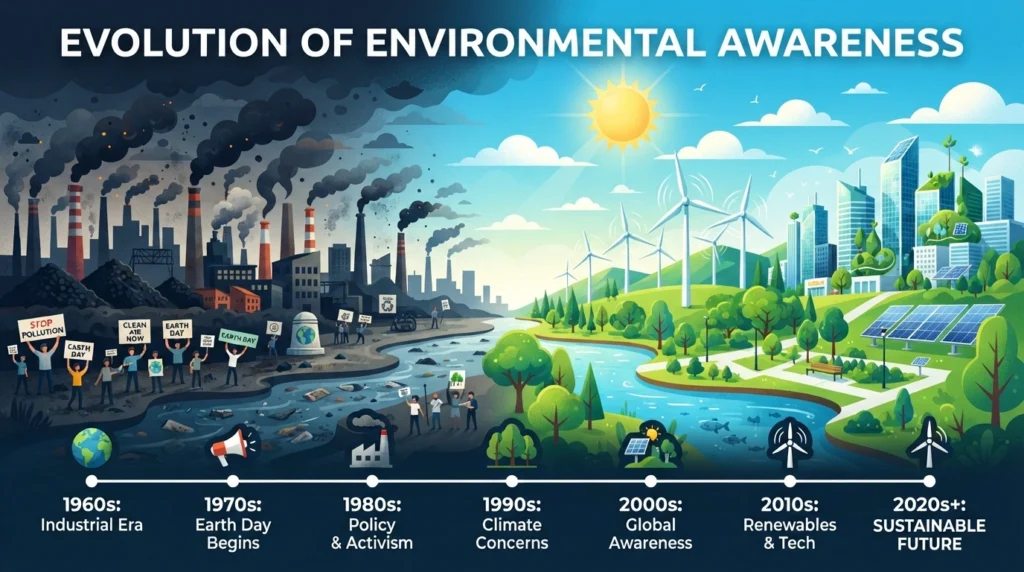
Public messaging around pollution has evolved significantly since environmental issues first became a major part of public discourse in the United States and globally.
The Birth of Modern Environmentalism (1960s–1970s)
Growing public concern about air and water pollution led to significant policy changes during this period, including the establishment of the U.S. Environmental Protection Agency in 1970 and the first Earth Day that same year.
According to the EPA, this era introduced some of the earliest widely recognized pollution slogans, often paired with striking imagery to build public support for new environmental regulations.
The Expansion of Recycling and Anti-Litter Messaging (1980s–1990s)
As environmental policy matured, pollution slogans expanded beyond air and water quality to address litter, waste management, and the growing recycling movement. This period produced messaging aimed at shifting individual behavior, encouraging people to see their personal choices, like littering or improper waste disposal, as directly connected to broader pollution problems.
Modern Pollution Awareness Campaigns (2000s–Present)
Today’s pollution slogans increasingly address newer environmental concerns, particularly plastic pollution and microplastics in oceans and waterways.
Organizations such as Ocean Conservancy and the United Nations Environment Programme have developed campaigns specifically targeting single-use plastics, reflecting growing scientific understanding of how plastic pollution affects marine ecosystems and, ultimately, human health.
Popular Pollution Slogans Used in Environmental Campaigns
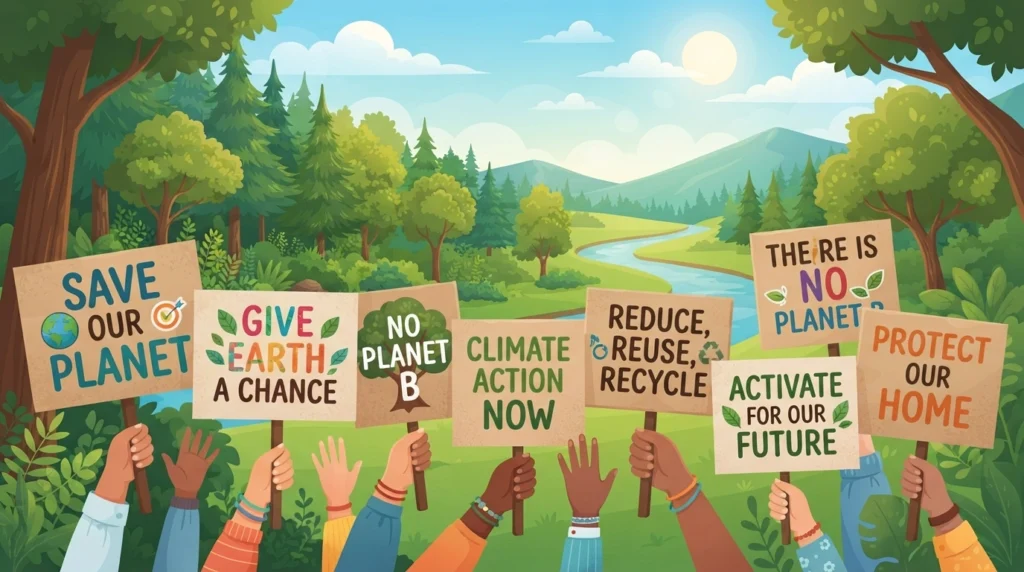
Here are some of the most widely referenced pollution slogans used across air quality, water, and waste-related awareness campaigns:
- “Clean Air Starts With You” A phrase encouraging individual accountability for air quality improvements.
- “Don’t Trash Our Future” A widely used phrase in anti-litter and waste reduction campaigns.
- “Every Drop Counts, Keep Water Clean” A phrase used in water pollution awareness initiatives.
- “Reduce, Reuse, Refuse Plastic” A modern variation addressing plastic pollution specifically.
- “Breathe Easy, Choose Clean Energy” A phrase connecting air quality to energy choices.
- “Pollution Solutions Start at Home” A phrase emphasizing everyday household actions.
- “Protect the Planet, Protect Yourself” A phrase linking environmental health directly to public health.
Each of these pollution slogans reflects a specific environmental focus area, from air and water quality to plastic waste and household energy choices.
Why These Slogans Are Designed to Be So Memorable
Environmental communication researchers point to a few consistent principles behind effective pollution slogans, many of which mirror techniques used across other public health and awareness campaigns:
- Personal responsibility framing Slogans that connect pollution to individual daily choices, rather than abstract global statistics, tend to be more effective at motivating behavior change.
- Clear, specific action The strongest pollution slogans suggest a concrete step, such as reducing plastic use or conserving water, rather than presenting vague environmental concern.
- Emotional urgency balanced with hope Effective campaigns often pair a sense of environmental urgency with language suggesting that change is genuinely achievable, avoiding messaging so dire it feels hopeless.
This combination explains why certain pollution slogans have remained effective across decades of environmental campaigns, even as the specific issues they address, from smog to plastic straws, have shifted over time.
How Organizations Use Pollution Slogans Today
Pollution slogans appear across a wide range of educational and advocacy settings. Schools use them during science curricula and Earth Day observances, often pairing posters and classroom activities with lessons about air quality, water conservation, or waste reduction.
Environmental organizations use similar messaging in public awareness campaigns, community cleanup events, and policy advocacy materials aimed at both individuals and lawmakers.
Organizations such as the Environmental Protection Agency, the United Nations Environment Programme, and Ocean Conservancy provide free educational resources.
Campaign materials that schools and community groups can adapt for local use, often including specific messaging guidance based on current environmental science and public health research.
Slogans Specifically Addressing Plastic Pollution
As plastic pollution has become a significant global environmental concern, a distinct category of pollution slogans has emerged specifically addressing single-use plastics and ocean waste. Examples of this category include:
- “Skip the Straw, Save the Sea” A phrase widely used in campaigns against single-use plastic straws.
- “Plastic Doesn’t Disappear, It Just Moves” Addresses the misconception that discarded plastic simply vanishes.
- “One Bag at a Time, One Ocean for Life” A phrase used in reusable bag promotion campaigns.
- “Refuse, Reduce, Rethink Plastic” A modern variation on traditional recycling messaging.
- “Bottles Belong in Bins, Not Oceans” A direct, action-oriented phrase for waste disposal campaigns.
These plastic-focused pollution slogans reflect how environmental messaging has expanded to address newer and increasingly urgent categories of pollution beyond traditional air and water concerns.
Tips for Writing Effective Pollution Awareness Slogans
If you’re creating materials for a school project, community campaign, or environmental awareness event, here are practical tips grounded in current environmental communication research:
- Connect the message to a specific, everyday action. Phrases that suggest a concrete step, like reducing plastic use or conserving water, tend to be more motivating than vague environmental concern.
- Balance urgency with hope. Effective slogans acknowledge the seriousness of pollution while suggesting that individual and collective action can genuinely make a difference.
- Keep it short and repeatable. Aim for six to ten words so the phrase can be easily printed on posters, shared on social media, or used during events.
- Use accurate environmental information. Avoid exaggerated claims that could undermine your campaign’s credibility with an informed audience.
- Pair the slogan with real resources or actions. A memorable phrase works best alongside genuine opportunities for involvement, like a cleanup event, recycling program, or petition.
Studying how national and international environmental organizations balance urgency with actionable, hopeful messaging offers a useful lesson for anyone writing new pollution awareness materials.
Frequently Asked Questions
What is an effective pollution slogan for a school project?
Simple, action-oriented phrases like “Clean Air Starts With You” work well for school projects because they connect a broad environmental issue to a specific, achievable action.
Why do modern pollution slogans often focus on plastic waste?
Growing scientific understanding of how plastic pollution affects oceans, wildlife, and human health has led many organizations to develop messaging specifically addressing single-use plastics and microplastics.
Are there official resources for creating pollution awareness campaigns?
Yes. The Environmental Protection Agency, the United Nations Environment Programme, and Ocean Conservancy all provide free, research-based educational resources and campaign materials for schools and community groups.
Do pollution slogans need to address a specific type of pollution?
Not necessarily. While some campaigns focus specifically on air, water, or plastic pollution, broader slogans addressing environmental responsibility in general can also be effective, particularly for younger audiences.
Can students help create pollution awareness slogans for their school?
Yes. Many schools involve student environmental clubs in creating campaign materials, which can improve engagement since the messaging reflects language students genuinely relate to and understand.
Conclusion
Pollution slogans translate complex environmental science into language simple enough to inspire real behavior change, from the earliest air quality campaigns of the 1970s to today’s messaging addressing plastic waste and ocean pollution.
These phrases reflect decades of evolving environmental communication, shaped by growing scientific understanding of how pollution affects both ecosystems and human health.
Whether you’re a student building a classroom project, an educator planning an Earth Day event, or a community organizer leading a cleanup campaign, understanding the history and psychology behind effective pollution slogans can help ensure your messaging genuinely contributes to a cleaner, healthier environment.
References
- United States Environmental Protection Agency, “History of the EPA and Environmental Policy” epa.gov
- United Nations Environment Programme, “Pollution and Plastic Waste Campaigns” unep.org
- Ocean Conservancy, “Plastic Pollution Research and Campaigns” oceanconservancy.org
- Earth Day Organization, “History of Earth Day and Environmental Awareness” earthday.org
- World Health Organization, “Air Pollution and Health Data” who.int
- Smithsonian Institution, “History of the American Environmental Movement” si.edu