Picking name tags sounds simple until you face adhesive labels that peel off, badges that flip backward, and a budget that has to stretch across 200 guests. The wrong choice slows check-in, damages clothing, and leaves people squinting at each other’s names. This guide shows you which type fits your event, what each one costs in effort and money, and how to make every name readable.
Types of Name Tags and When to Use Each
The best name tags match the length of the event and the clothing people will wear. Here is a quick guide to the main options:
- Adhesive name tags: best for one-day mixers, workshops and open houses. Peel, stick, toss.
- Magnetic name badges: best for staff who wear delicate fabrics, since they leave no holes.
- Pin-back badges: a classic pick for volunteers and long-term teams.
- Clip badges: good for thicker clothing and uniforms.
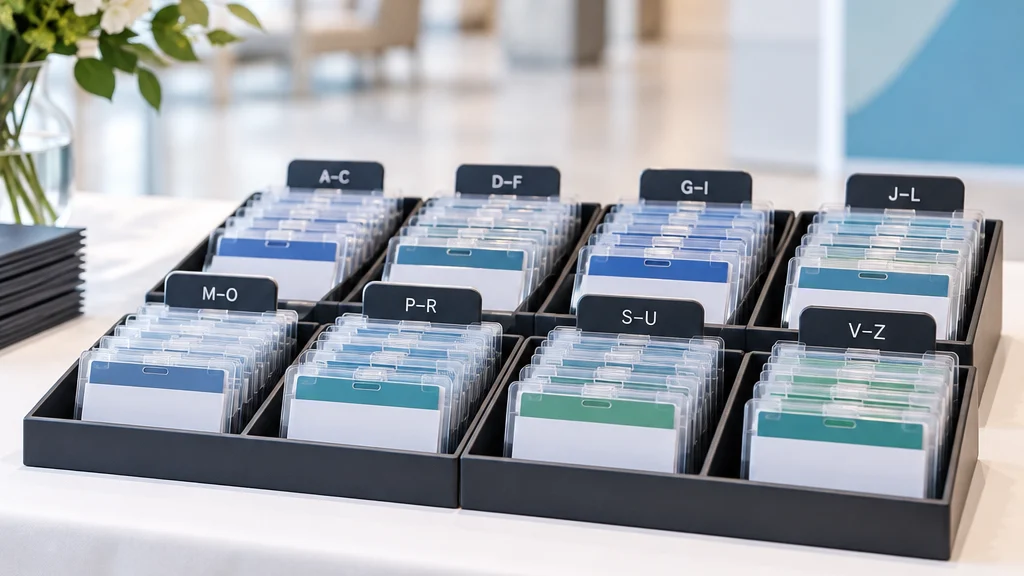
- Lanyard badges: ideal for conferences, where people need to scan a code or show a pass.
- Engraved name plates: suit desks, doors and permanent roles.
Name Tag Comparison by Cost, Look and Reusability
Adhesive labels cost the least per person, while engraved and magnetic options cost more but last for years. This table compares the main name tags side by side. Prices are typical US ranges and vary by seller and order size, so confirm them with your supplier.
| Type | Typical US Price | Durability | Clothing Friendly | Best Use |
|---|---|---|---|---|
| Adhesive name tags | Cents per tag | One day | Good on most fabrics; may leave residue on delicate ones | Mixers, classes, one-time meetings |
| Printable name tag labels | Low per sheet | Single use | Good on most fabrics | Events with changing guest lists |
| Badge holders and lanyards | Low to moderate | Reusable for many events | Excellent, no contact with fabric | Conferences, trade shows |
| Magnetic name badges | Moderate to high | Years | Excellent, no holes | Staff, hospitality, healthcare |
| Engraved name plates | Moderate to high | Years | Pin or clasp; may snag delicate fabric | Permanent staff, volunteers |
How to Pick the Right Name Tags for Your Event or Workplace
Start with the crowd size, the budget and the setting, then work through these five checks.
- Size: Choose about 3 x 4 inches for conferences so names read from a few feet away. Smaller labels suit casual mixers.
- Readability: Print first names large, and pick high-contrast colors.
- Materials: Use adhesive labels for one-day events. Magnetic badges and reusable holders suit daily staff wear.
- Printing method: Printable label sheets work for lists under a few hundred. Order custom printing or engraved plates for larger or permanent needs.
- Quantity: Order 10 to 15 percent extra for walk-ins and misprints.
Tips for Making Name Tags Easy to Read
People read a badge from about arm’s length, so design for that distance. Keep the layout simple and the first name big.
- Font size: Make the first name large, typically at least 0.5 inch (about 36 pt) tall. Use a smaller size for the last name and title.
- Contrast: Use dark text on a light background. Skip glossy finishes that glare under bright lights.
- Typeface: Choose a clean sans-serif and avoid script fonts.
- Placement: Wear the badge on the right shoulder, so it sits in the line of sight during a handshake. Lanyards should hang at chest height, not at the waist.
Key Takeaways
- Match the type to the event. Adhesive labels suit one-day mixers, while badge holders and lanyards suit multi-day conferences.
- Think reusability. Magnetic badges and engraved plates cost more upfront but save money for staff and repeat use.
- Consider clothing and comfort. Magnets protect delicate fabrics, and adhesive labels work best on flat, sturdy surfaces.
- Print for readability. Use a bold first name, high contrast, and a simple sans-serif font that people can read from a few feet away.
- Plan for volume and timing. Printable label sheets handle last-minute changes, and custom orders need lead time, so confirm turnaround with your supplier.
Frequently Asked Questions About name tags
What size should a name tag be?
Common sizes run about 3 by 4 inches for events and about 1 by 3 inches for workplace badges. Choose a size that fits a large first name in readable type. Check your holder or label sheet dimensions before printing.
Where should you wear a name tag?
Wear it on your right shoulder or upper chest. When you shake hands, people’s eyes follow your arm to that spot, so they can read it easily. Lanyards should hang high enough that the tag does not flip or sit near your waist.
Are magnetic name tags safe for pacemakers?
Magnets can interfere with some pacemakers and other implanted medical devices. People with these devices should ask their doctor before wearing magnetic badges. Offer pin, clip, or lanyard alternatives so every guest or employee can choose a option that suits them.
Can you print name tags at home?
Yes. Buy printable name tag labels or insert cards sized for your holders, then print them with a standard inkjet or laser printer. Use the manufacturer’s template, run a test page on plain paper first, and check alignment before printing the full batch.
References & Further Reading
- U.S. Small Business Administration – U.S. Small Business Administration
- Occupational Safety and Health Administration – U.S. Department of Labor
About This Article
This guide was written with AI assistance from publicly available information. Prices, nutrition values and availability can change, so confirm important details with the official source before you decide.