Why Short Phrases Build Big Brands
Some of the most successful companies in the world are remembered for just a handful of words. A great tagline doesn’t need to be clever, poetic, or complicated it needs to be clear, honest, and easy to repeat.
That’s the entire philosophy behind simple slogans, and it’s why they continue to outperform longer, more elaborate messaging across nearly every industry.
This post explains why brevity wins in branding, breaks down real-world examples of short taglines that became household phrases, and walks through a practical process for writing your own memorable slogan.
“A slogan’s job isn’t to impress copywriters it’s to live rent-free in a customer’s head.” Brand Strategy Quarterly
Why Simple Slogans Work Better Than Long Ones
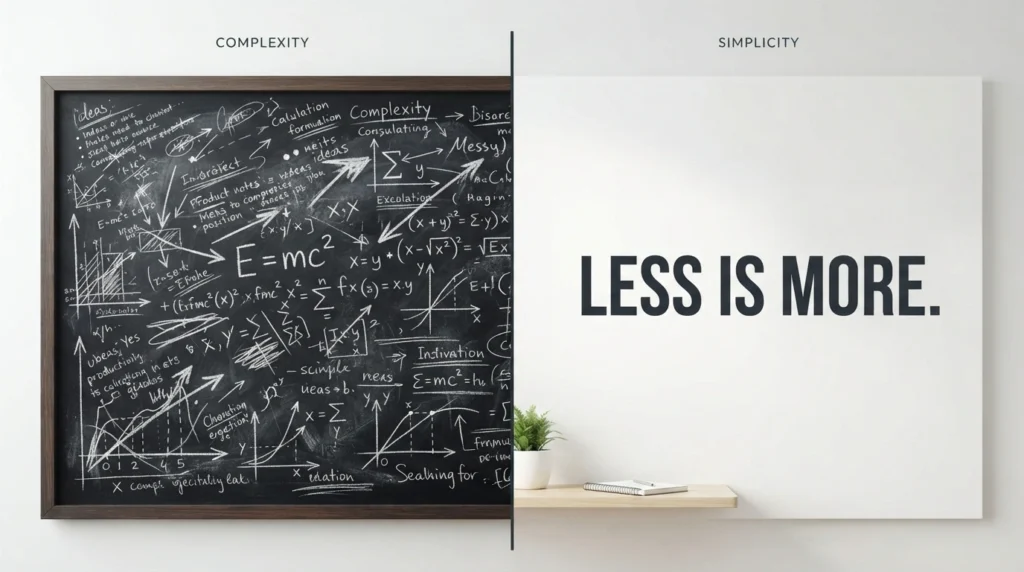
Human attention spans are short, and marketing messages compete against hundreds of other distractions every single day. A short phrase cuts through that noise far more effectively than a paragraph of brand copy ever could.
The Cognitive Science of Brevity
Marketing psychologists have repeatedly shown that people recall short, rhythmic phrases more accurately than long, descriptive sentences.
This is partly due to what researchers call “processing fluency” when something is easy to read or hear, the brain interprets it as more trustworthy and memorable at the same time.
Short taglines typically succeed because they include:
- Few syllables easy to say out loud without effort
- Clear benefit tells the customer exactly what they get
- Emotional tone confident, warm, playful, or bold
- Consistency used the same way across every platform
Why Businesses of Every Size Benefit
Large corporations aren’t the only ones who need strong messaging. Small businesses, nonprofits, and even personal brands rely on short phrases to summarize their entire value proposition in a single glance something that matters even more on mobile screens and social media feeds where space is limited.
Famous Examples of Simple Slogans
Some of the best-known brand phrases in advertising history prove that fewer words often create a stronger impression than a fully spelled-out sentence.
Classic Brand Taglines
- “Just Do It” One of the most recognized taglines in advertising history, built around action and motivation.
- “Because You’re Worth It” A short phrase that turned into decades of brand identity around confidence and self-worth.
- “Think Different” Grammatically unconventional, but instantly recognizable and tied directly to a brand’s philosophy.
- “I’m Loving’ It” A casual, conversational phrase designed to feel personal rather than corporate.
- “The Ultimate Driving Machine” Short enough to remember, yet specific enough to communicate a clear promise.
Modern and Startup-Era Simple Slogans
Newer brands, especially in tech and e-commerce, often favor even shorter, punchier phrasing suited for digital platforms.
- “Just Eat” A two-word phrase that doubles as both a brand name and a call to action.
- “Impossible Made Possible” Common in fitness and performance-based branding.
- “Where Ideas Happen” Frequently used in creative and workspace branding.
- “Built for Speed” A phrase favored by tech startups emphasizing efficiency.
- “Simple. Fast. Reliable.” A three-word structure that mirrors the very brevity it promotes.
“The shorter the slogan, the longer it tends to survive in a customer’s memory.”
How to Write an Effective Simple Slogans
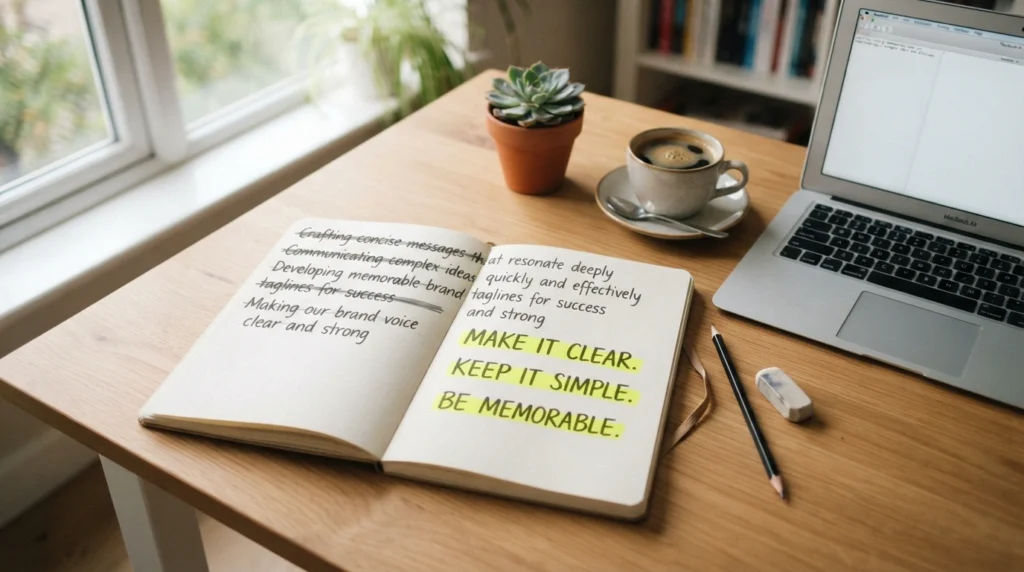
Not every short phrase becomes a lasting tagline. Strong slogans follow a repeatable structure that balances clarity, tone, and brand relevance.
Keep It Under Seven Words
Most memorable simple slogans fall between two and seven words. Anything longer starts to feel like a sentence rather than a tagline, which makes it harder for customers to recall later.
Focus on One Clear Benefit
A strong simple slogans communicates a single idea rather than trying to summarize every feature of a product or service. Trying to say too much at once usually results in a phrase that says very little.
Match the Tone to Your Audience
Simple slogans aimed at busy professionals should sound very different from one targeting teenagers or hobbyists. Word choice, rhythm, and even punctuation should reflect who the brand is actually speaking to.
Test It Out Loud
Many successful taglines are refined by simply saying them aloud repeatedly. If a phrase feels awkward or forced when spoken, it usually needs to be shortened or restructured before it’s finalized.
Where Simple Slogans Are Used Today
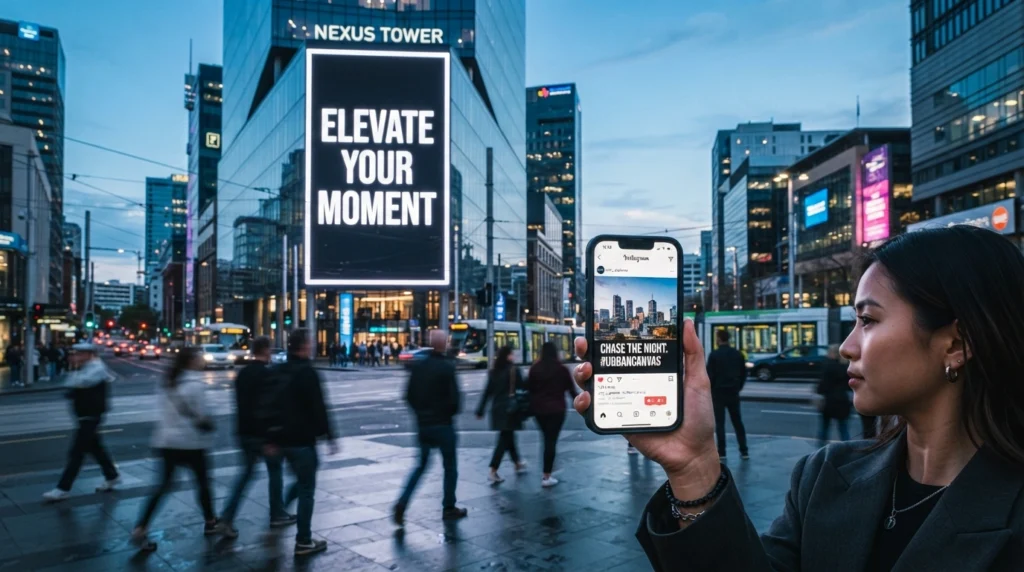
Short taglines now appear across nearly every customer touchpoint, not just traditional advertising.
- Website homepages and landing pages
- Social media bios and ad captions
- Product packaging and retail displays
- Email signatures and newsletter headers
- Business cards and storefront signage
- Podcast intros and video outros
Each placement may require slight formatting adjustments, but the underlying goal remains consistent: deliver a message that sticks after the first read.
The Role of Simple Slogans in Long-Term Brand Recognition
Beyond first impressions, a strong tagline plays a long-term role in how a brand is remembered years later. Repetition across multiple platforms reinforces the same phrase until it becomes shorthand for the entire company, similar to how a logo becomes instantly recognizable without any accompanying text.
Companies that revisit and refine their slogans over time without changing its core meaning tend to build stronger long-term brand equity than those who frequently switch messaging altogether.
Frequently Asked Questions
What makes a slogan simple and effective?
Effective simple slogans are short, easy to say out loud, communicates one clear benefit, and matches the tone of its intended audience. It should be memorable enough to recall days later, not just understood in the moment.
How many words should a good slogan have?
Most successful taglines fall between two and seven words. Longer phrases tend to lose impact and become harder for audiences to recall accurately.
Why do small businesses need a slogan too?
A short tagline helps small businesses communicate their value instantly, especially on limited spaces like social media bios, business cards, or mobile ads where longer descriptions aren’t practical.
Can a slogan be changed after it’s already established?
Yes, but frequent changes can weaken brand recognition. Most successful brands refine their slogan gradually rather than replacing it entirely, preserving the core message customers already associate with them.
Do simple slogans work for every industry?
Yes. From retail and food service to technology and nonprofit work, short, clear messaging consistently performs better than long, detailed statements across nearly every sector.
Conclusion
Short, well-crafted phrases continue to shape how customers perceive and remember brands, regardless of industry or company size. A strong slogan condenses an entire brand identity into something people can recall instantly, often years after first hearing it.
Businesses that take time to test tone, audience fit, and word choice consistently produce the kind of messaging that builds lasting recognition rather than a phrase that’s quickly forgotten.
References
- American Marketing Association Research on Brand Messaging and Consumer Recall, ama.org
- Harvard Business Review The Psychology of Effective Advertising Slogans, hbr.org
- Journal of Consumer Psychology Processing Fluency and Brand Trust Studies, journals.elsevier.com
- Nielsen Global Advertising Effectiveness and Brand Recall Reports, nielsen.com
- Advertising Age (Ad Age) History of Iconic Brand Taglines, adage.com