The Words That Built the Labor Movement
Few movements in history have relied as heavily on short, powerful phrases as organized labor. From factory floors in the early 1900s to modern picket lines, union slogans have given workers a shared voice, a sense of solidarity, and a way to communicate demands that could otherwise take pages to explain.
This post looks at why these phrases have remained so effective for over a century, highlights some of the most recognized examples from labor history, and explains how modern unions continue to use short, memorable messaging to organize and advocate for workers today.
“A strong labor slogan doesn’t just describe a demand it turns individual frustration into collective action.” Labor History Review
Why Union Slogans Have Always Been So Powerful
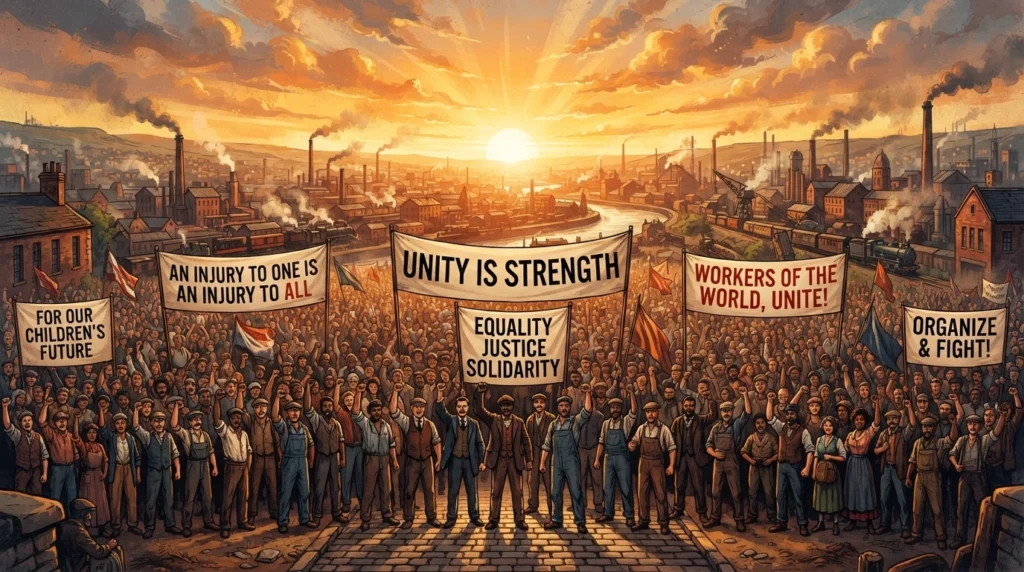
Organizing large groups of people around a shared cause requires messaging that can be understood instantly, repeated easily, and shouted across a crowd if necessary. That’s exactly the role short labor phrases have played for generations.
The Psychology of Collective Messaging
Social psychologists studying group behavior have long noted that shared chants and phrases strengthen group identity faster than individual conversations.
When workers repeat the same words together, it reinforces a sense of belonging and shared purpose, which is essential during strikes, negotiations, or public demonstrations.
Effective labor phrases typically share a few common traits:
- Rhythm easy to chant in unison during marches or rallies
- Clarity communicates a specific demand or value
- Unity language uses “we” and “us” rather than individual pronouns
- Emotional weight conveys urgency, pride, or solidarity
Why Union Slogans Matter Beyond the Picket Line
Short labor phrases aren’t limited to protests. They appear on union newsletters, membership materials, negotiation campaigns, and even historical monuments, serving as a lasting record of what a particular movement stood for at a specific moment in time.
Famous Examples of Union Slogans Throughout History
Some of the most recognized union slogans in labor history have outlived the specific strikes or campaigns that produced them, becoming part of broader cultural memory.
Historic Labor Movement Phrases
- “An Injury to One Is an Injury to All” Widely associated with early industrial unions and still used to emphasize collective responsibility.
- “Solidarity Forever” Originally the title of a labor anthem, later shortened into a standalone rallying phrase.
- “Eight Hours for Work, Eight Hours for Rest, Eight Hours for What We Will” Central to the labor movement’s push for standardized working hours.
- “Union Yes” A short, direct phrase commonly used during union organizing campaigns.
- “No Contract, No Peace” Frequently chanted during negotiations that reach an impasse.
Modern Labor and Workplace Slogans
Contemporary labor movements have adapted their messaging for broader audiences, including social media and public awareness campaigns.
- “Fight for Fifteen” Associated with campaigns advocating for a higher minimum wage.
- “Workers’ Rights Are Human Rights” A phrase connecting labor advocacy to broader civil rights language.
- “Stand Together, Rise Together” Common in cross-industry solidarity campaigns.
- “Respect, Protect, Organize” Frequently used in newer organizing drives across service industries.
- “Our Labor, Our Voice” A phrase emphasizing workers’ direct role in shaping workplace decisions.
“The strongest labor phrases translate a complicated legal or economic demand into something a crowd can chant in five seconds.”
How Effective Union Slogans Are Created
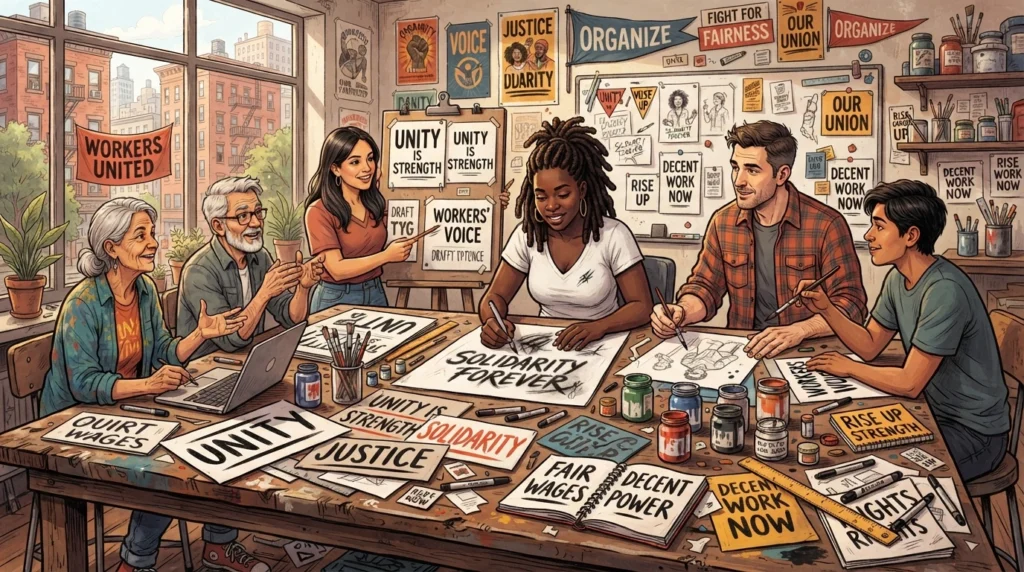
Not every union slogans used during a labor campaign becomes lasting or memorable. Strong messaging tends to follow a similar structure, regardless of the era or industry involved.
Keep the Message Short and Chantable
Union slogans used during marches or rallies typically stay under eight words, since anything longer becomes difficult for large groups to repeat together clearly and consistently.
Center the Message on Shared Identity
Successful labor phrases almost always use collective language, reinforcing that the issue affects an entire group rather than a single individual, which strengthens both solidarity and public sympathy.
Match the Tone to the Moment
A phrase used during a peaceful contract negotiation often sounds very different from one used during an active strike. Tone shifts depending on urgency, audience, and the specific stage of a labor dispute.
Test the Phrase in Group Settings
Many effective union slogans are refined during actual organizing meetings, where members can test how a phrase sounds when chanted aloud or printed across a picket sign before it’s adopted more broadly.
Where Union Slogans Are Used Today
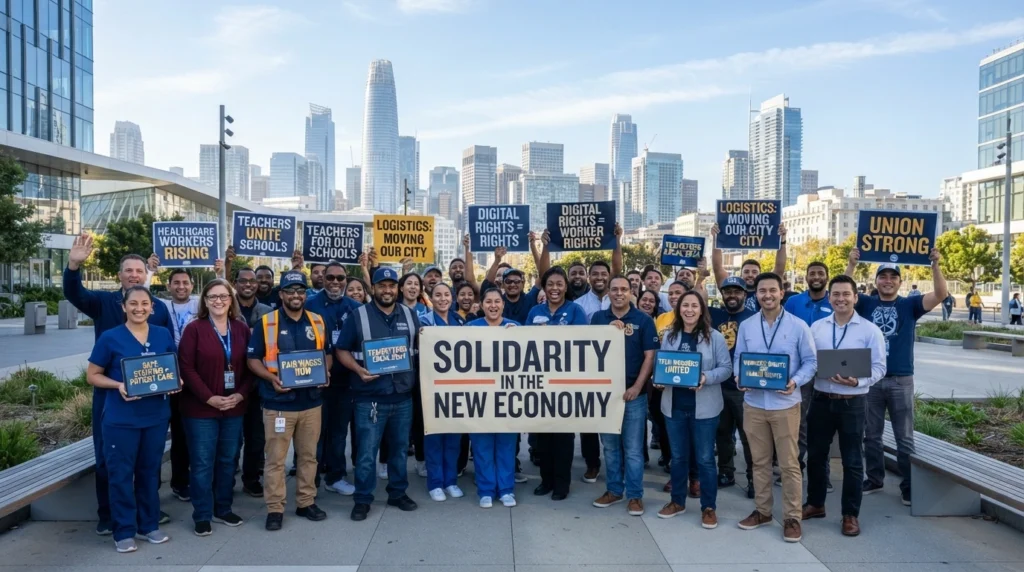
Beyond historical strikes, short union slogans continue to appear across a wide range of modern union activity.
- Picket signs and rally banners
- Union newsletters and membership emails
- Social media campaigns and hashtags
- Contract negotiation materials
- Workplace organizing flyers
- Public awareness and solidarity events
Each setting requires slightly different phrasing, but the underlying purpose remains consistent: unify members around a shared demand or value.
The Lasting Role of Slogans in Labor History
Beyond their immediate use during a specific campaign, many labor phrases have taken on lasting cultural significance, appearing in textbooks, documentaries, and museum exhibits dedicated to workers’ rights history.
This is because a well-crafted phrase can summarize decades of struggle and progress in just a few words, making it accessible to audiences long after the original movement has ended.
Unions that maintain consistent messaging across multiple campaigns often find that their core phrases become recognizable symbols of the organization itself, similar to how a flag or logo represents a broader cause.
Frequently Asked Questions
What makes a union slogan effective?
An effective slogan is short, easy to chant in a group setting, communicates a clear demand, and uses collective language that reinforces solidarity among workers.
Are union slogans still used in modern labor movements?
Yes. While messaging has expanded to include social media and hashtags, short chantable phrases remain central to picket lines, organizing drives, and public awareness campaigns today.
Why do labor movements rely on short phrases instead of detailed explanations?
Short phrases are easier to repeat in large groups and communicate urgency more effectively than lengthy explanations, which is especially important during rallies or strikes.
Can a single slogan represent an entire labor movement?
Often yes. Phrases like historic labor rallying cries have come to represent broader decades-long movements, even though they originated from a specific campaign or moment.
Who typically creates official union slogans?
Union leadership, communications teams, and rank-and-file members often collaborate to develop slogans, frequently refining them during organizing meetings before public use.
Conclusion
Short, powerful phrases have shaped the labor movement for well over a century, giving workers a unified voice during negotiations, strikes, and public campaigns.
Whether rooted in historical struggles or modern workplace advocacy, these phrases continue to condense complex demands into something easy to remember and repeat.
Organizations that invest in clear, purposeful messaging continue to strengthen solidarity and keep their cause visible long after any single campaign has ended.
References
- U.S. Department of Labor History of the American Labor Movement, dol.gov
- American Federation of Labor and Congress of Industrial Organizations (AFL-CIO) Labor History and Campaign Archives, aflcio.org
- Cornell University ILR School Labor History Research and Archives, ilr.cornell.edu
- Library of Congress Historical Labor Movement Collections, loc.gov
- International Labour Organization (ILO) Global Reports on Workers’ Rights and Organizing, ilo.org